NOT ALL DAMAGE IS THE SAME
What happened to your AC?
Explore how each kind of damage affects the parts and materials inside.
WEATHER & EXPOSURE
Monsoon rust and coastal corrosion
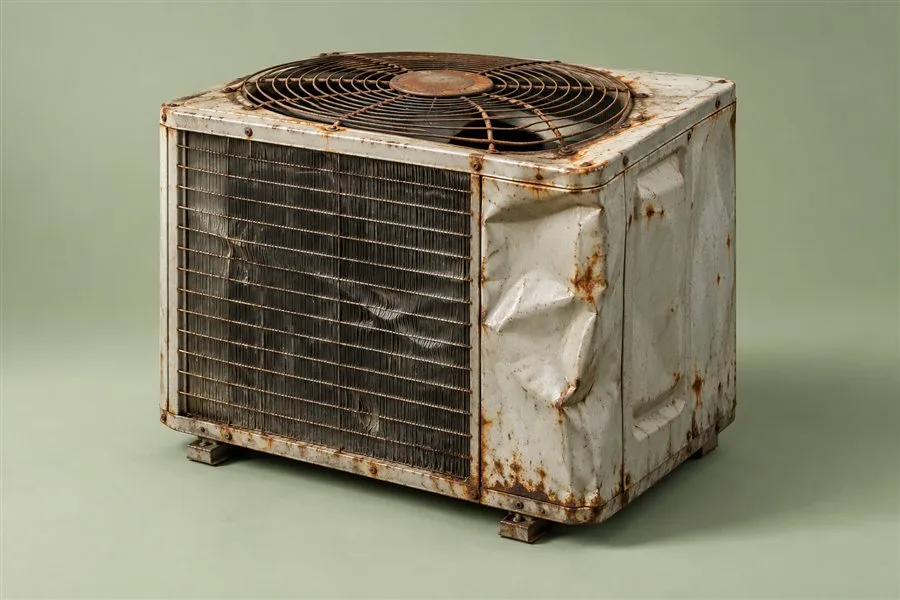
Outdoor units in Mumbai face years of monsoon rain and humidity, and buildings near the coast also get salt air. The steel casing rusts first, and coil fins can corrode. Usually, the compressor inside is still intact. Rust on the casing has little effect on scrap value; badly corroded coils have more.
KNOCKS & BREAKAGE
Physical damage
- Cracked indoor panels: cosmetic; everything inside still counts.
- Dented casing: little effect unless the coils or compressor are damaged.
- Crushed or bent coil fins: the metal is still there, though heavily crushed coils are harder to recover.
- Fallen during a move: check whether pipes are broken; the metal still has value.
HEAT & SMOKE
Fire and smoke damage
A fire-damaged AC is valued for its metal: compressor shell, copper and steel. Plastics and boards may be destroyed. Keep it disconnected, do not switch it on to test it, and mention the fire when you enquire.
WATER & MOISTURE
Water and flood damage
A flooded AC is very unlikely to be safely reusable, but its compressor, coils and metal remain. Let it dry out and keep it unplugged.
Safety first
- Disconnect power before handling any damaged AC.
- Do not cut refrigerant lines.
- Wear gloves — damaged fins and casings have sharp edges.
- Keep children away from damaged units waiting for pickup.
How to describe a damaged AC
- Type and tonnage.
- What happened: rust, fire, flood, fall.
- Whether the compressor and coils are still inside.
- Clear photos of all sides and the damage.
Then see damaged AC buying. If it is simply not working rather than damaged, see non-working ACs.
