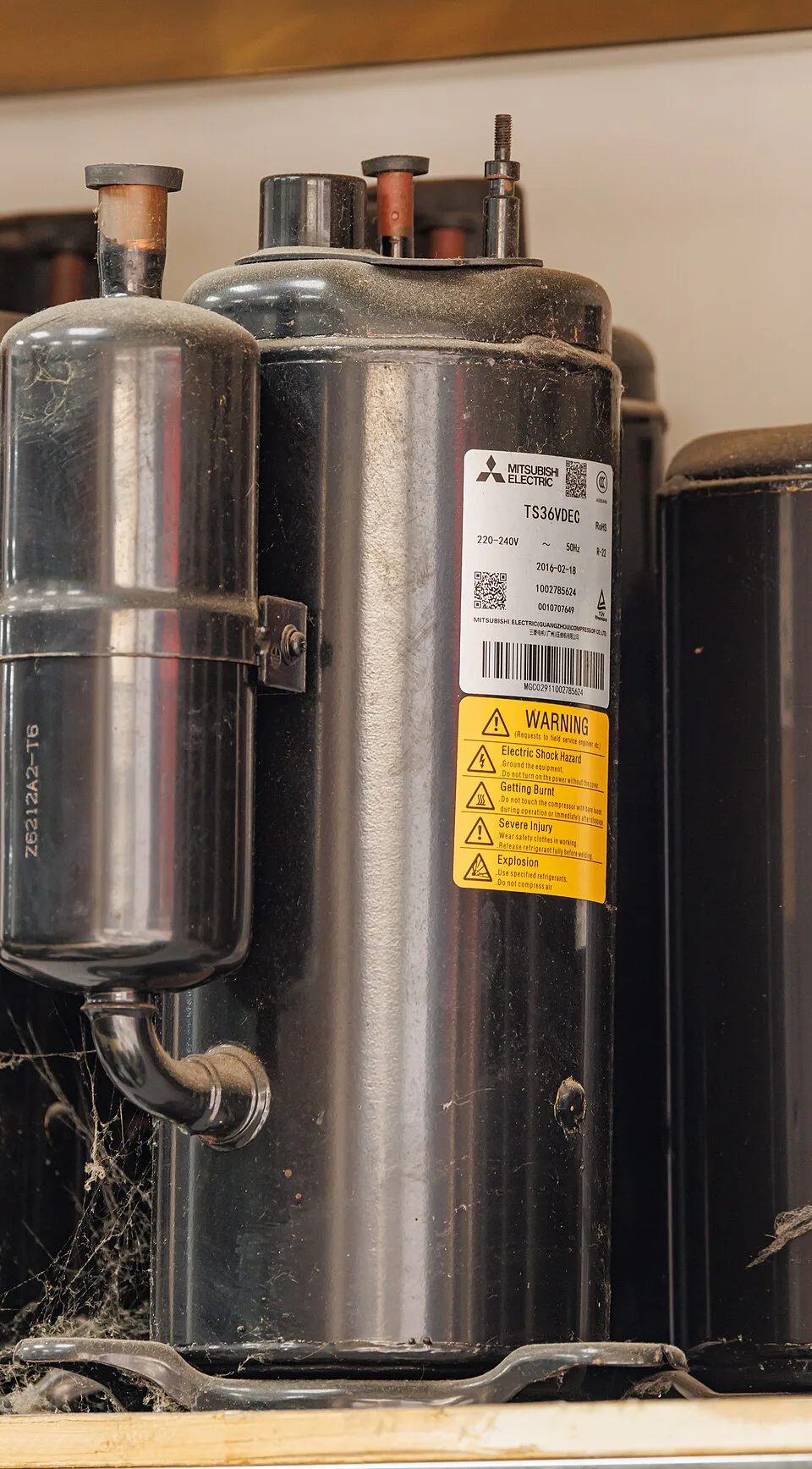
What a compressor does
The compressor pumps refrigerant around the AC's sealed system, compressing it so it can release heat outside through the condenser coil. It runs on an electric motor sealed inside a steel shell.
What is inside
- A heavy steel shell — welded and sealed.
- An electric motor with copper windings (in most compressors).
- The pump mechanism — rotary, reciprocating or scroll parts in steel and cast iron.
- A small amount of oil.
The copper windings and the weight of steel and iron are what give a compressor its scrap value — even when it has failed.
Types of compressor
| Type | Where found | Notes |
|---|---|---|
| Rotary | Most home split and window ACs | Compact, common in 1–2 ton units |
| Reciprocating | Older ACs and some fridges | Piston-type; often heavier for its capacity |
| Scroll | Larger commercial units | Bigger, heavier compressors |
| Inverter (variable speed) | Inverter ACs | Usually rotary type with a variable-speed motor |
What affects compressor scrap value
- Size: a larger compressor has more copper and steel.
- Intact or cut: intact compressors are assessed whole; cut ones are assessed by their separated material.
- Winding material: copper windings are worth more than aluminium where the latter are used.
- Metal rates on the day.
Dead compressors still sell
A seized, burnt or leaking compressor still contains its copper and steel. Its scrap value comes from material, not function.
Safety
Do not try to cut open a compressor yourself. It contains oil and may contain refrigerant under pressure. Leave that to a recycler.
Selling compressors
Households usually sell compressors as part of a whole AC. Technicians and contractors accumulate loose compressors from repairs and can sell them in lots. See AC compressor scrap buying.
